Ship Something Small
You can write a program. You cannot yet turn an idea into one and put it in somebody's hands. This segment does that end to end: cut a wish list to one sentence, design one table set for it, build the smallest version a real person can use, then hand it to somebody who is not you and watch what they break in the first two minutes. Shipped means it runs on their machine, not that it is on the internet.
- trending_upIntermediate
- schedule7h 13m
- menu_book12 Lektionen
- publicEnglish
- workspace_premiumBasic
Briefing
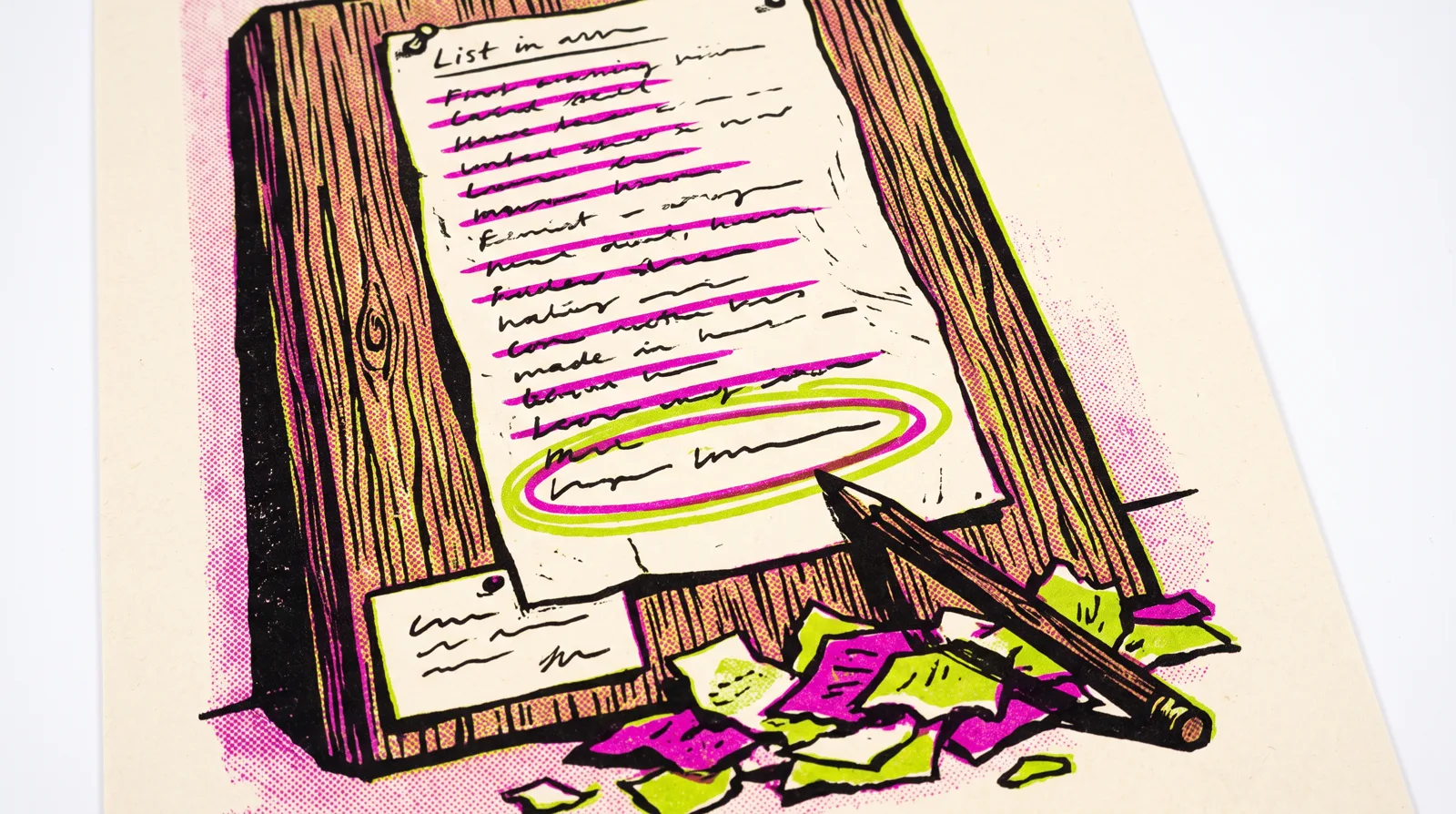
V1 taught you to write a program. V2 taught you to fix it when it breaks. Then most people stop, because they have a working script and no idea how to turn something they want into one. This is that step. You start with everything you wish your project did — a real learner's list ran to nine features — and you cut it to one sentence that another person could build against, with one thing you could watch happen to prove it is true. You design two tables for that one project and no more, and you find out on three rows rather than three hundred exactly which nonsense your database will quietly accept. You build the smallest version that runs end to end and does nothing, then fill it in one branch at a time so it is runnable at the end of every sitting. The bug that loses a user's work, the round that crashes on an empty database, the program that cannot find its own data on somebody else's machine — you cause every one of them on purpose and get it back. Then you give it to a stranger for ten minutes and do not help. What they break in the first two minutes is worth more than the last two evenings, and sorting their list into fix-now, next-version and refused is the last skill the segment teaches. Shipped means one other person runs it on their own machine and it works. Not deployed, not hosted. That is a finished thing, and it is where this stops.
Kursübersicht · 4 Module
lockFreigeschaltet mit Zugang- 01 The Wish List, Cut Down3 Lektionen·1h 27m
Nobody struggles to cut a bad idea. Every line on a wish list is reasonable, which is exactly why nothing gets cut and nothing gets built. The single-observation test is the whole of this module: one…
- 02 The Shape3 Lektionen·1h 29m
The person never sees your code. They see the strings it prints and the prompts it stops on, and you can write all of that in fifteen minutes. Behind it, one rule from E2 carries the whole data…
- 03 The Smallest Thing That Runs3 Lektionen·2h 15m
Build a version that runs end to end and does nothing, then fill it in one branch at a time. At the end of every sitting the whole thing still runs, so when something breaks you know it was the last…
- 04 Somebody Who Is Not You3 Lektionen·2h 2m
Ten minutes with one stranger finds more than the last two evenings did, because they have not read anything and will do things you never would. The rule is that you do not help. Shipped means…
Häufig gefragt
- Was lernst du in Ship Something Small?
- You can write a program. You cannot yet turn an idea into one and put it in somebody's hands. This segment does that end to end: cut a wish list to one sentence, design one table set for it, build the smallest version a real person can use, then hand it to somebody who is not you and watch what they
- Brauche ich Vorkenntnisse?
- Vorkenntnisse werden vor Beginn von Ship Something Small empfohlen.
- Wie lange dauert Ship Something Small?
- Ship Something Small umfasst 4 Module und 12 Lektionen. Du lernst in deinem eigenen Tempo.
- Wie bekomme ich Zugang?
- Ship Something Small ist in jedem bezahlten Abo enthalten.
Mehr in Programming