The Four-Week Sprint
You have four weeks or less. This is what to do with them. One past paper sat cold and marked the way an examiner marks it, every lost mark tagged to a topic and a cause, an honest count of the hours you actually have, a list of topics you decide in writing not to study, and a dated plan on a wall. Then the mark-scheme vocabulary that earns marks in every topic at once, the last seventy-two hours, and the morning of.
- trending_upBeginner
- schedule6h 48m
- menu_book12 درس
- publicEnglish
- boltمجموعه رایگان
معرفی اجمالی
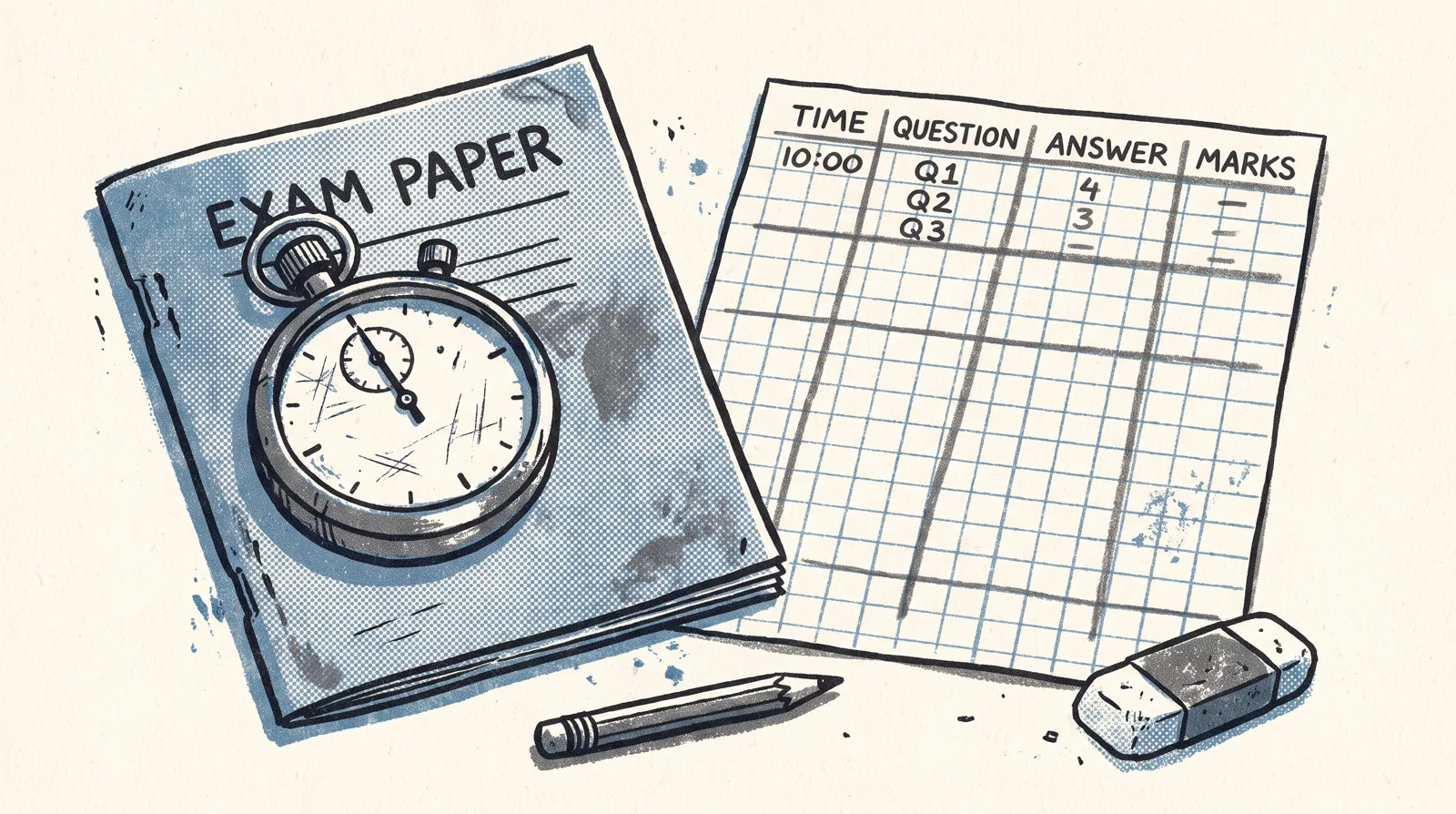
A student came to me with one week before her paper. She had been revising, hard, for weeks. She was revising the topic she was most frightened of, and it was not where her marks were going. That is the normal case rather than the unlucky one. Ask anybody mid-preparation which topic is costing them the most and they will name the one that makes them anxious. Mark a full paper and tag the losses and it is usually somewhere else — frequently somewhere wordy and unthreatening that nobody worries about, which is exactly why nobody works on it. So this segment does not start with a plan. It starts with a measurement. You sit one past paper, cold and timed, and then keep writing in a second colour for fifteen minutes past the bell, because a blank means two opposite things and that is how you tell them apart. You mark it against the published scheme, strictly, the day after. You tag every lost mark with a topic and one of five causes. Then you count the hours you actually have — not the ones in the plan you would like to write — and you find out that twenty-eight days is about seventeen study days, and you decide, in pen, with a signature, which topics get nothing. What comes out of that is usually not what anybody expects. On the worked example that runs through this segment, fifteen of thirty-nine lost marks needed no studying at all: eight were lost to answering a different question from the one asked, and seven to never reaching questions that were already known. Those fifteen marks cost about an hour. The other twenty-four cost three weeks. The rest is the plan. Backwards from a date you cannot move, on a wall, with every day naming a specific thing rather than a subject. A second full paper at eight to ten days out, with the decision about what to do with its results written and sealed three weeks in advance, because the version of you holding the envelope on day twenty-one will have eleven days invested and will not decide honestly. Then the last seventy-two hours, which contain nothing new by design, and the morning of. This segment teaches no subject content. Not one conversion, not one definition, not one trace table. Every topic routes to a module of Binary, Hex and Data Units, IGCSE and GCSE CS Theory or Programming for the Exam. You supply the past paper, the published mark scheme and your own specification. It is honest about what four weeks cannot do, in a whole lesson devoted to it. Four weeks cannot cover a syllabus you have not studied. It can collect every method mark on your paper, every mark you were losing to pace, and move two or three topics properly. On the worked example that is twenty-seven marks out of thirty-nine, and the twelve it does not reach are named in advance rather than discovered on the day. No past paper or mark scheme is reproduced anywhere in it, and this is not an official resource of any exam board.
طرح درس · 4 ماژول
lockآزاد میشود با دسترسی- 01 The Diagnostic3 درس·1h 32m
You are going to be told, in about an hour and a half of work spread over three days, something about yourself that you currently believe you already know. Almost nobody predicts their own two…
- 02 The Triage3 درس·1h 55m
There is a version of the next four weeks in which you study everything a bit. It is the version almost everybody chooses and it is the worst available option, because three hours is enough to make a…
- 03 The Dated Plan3 درس·2h
Your exam date is not a decision you get to make, and that is better news than it sounds. It removes a whole category of deliberation that adults sitting professional certifications have to work…
- 04 The Last Seventy-Two Hours3 درس·1h 21m
Nothing new. That is the whole rule for the last three days, and the reason is not that new material is hard. It is that an hour on a new topic on the Tuesday is an hour taken from recall of the…
پرسشهای متداول
- در The Four-Week Sprint چه چیزی یاد میگیرم؟
- You have four weeks or less. This is what to do with them. One past paper sat cold and marked the way an examiner marks it, every lost mark tagged to a topic and a cause, an honest count of the hours you actually have, a list of topics you decide in writing not to study, and a dated plan on a wall.
- آیا نیاز به تجربه قبلی دارم؟
- خیر — The Four-Week Sprint از مبانی شروع میشود و برای مبتدیان مناسب است.
- The Four-Week Sprint چقدر طول میکشد؟
- The Four-Week Sprint شامل 4 ماژول و 12 درس است. شما با سرعت خود یاد میگیرید.
- چگونه دسترسی پیدا کنم؟
- The Four-Week Sprint بخشی از مجموعه رایگان است — یک حساب رایگان ایجاد کنید و آن را به مجموعه خود اضافه کنید.
بیشتر در برنامهنویسی