code ai

Spotting Generated Work

How you tell who wrote a document, and the honest answer: no tell is proof, detector scores are not evidence, and every judgement here ends in a question you ask rather than a verdict you deliver. Built to make you less confident and better equipped.

  • trending_upBeginner
  • schedule6h 24m
  • menu_book12개 강의
  • publicEnglish
  • workspace_premiumBasic

개요

Work now arrives on your desk and you cannot tell how it was made. Coursework, job applications, incident reports, supplier answers, a long message from somebody whose English you thought you knew. A signal you have relied on for years has quietly stopped carrying information, and nothing in most people's training addresses it. This segment is about that problem, and it is deliberately built to disappoint anybody who came for a detection method. You will do the arithmetic that shows why a good eye produces more false alarms than finds. You will learn the one signal class that is a fact about the text rather than a guess about how humans write, and you will name the innocent explanation for it in the same breath. You will find out what a detector actually measures, why it misclassifies people writing in a second language at far higher rates, and why no such number can be used to make a decision about a person. Then the half that works. The question you ask about a piece of work that somebody who did the thinking can answer in four seconds. How to ask it without accusing anybody, what to do with each of the four answers you can get, and the closing sentence that everybody forgets. Finally, the brief: how to set work, hire, and buy so that the question of who wrote it stops being load-bearing at all. Every document analysed in this segment was written for the purpose. No real person's writing is examined anywhere in it, no product is named, and nothing here is a plagiarism or misconduct process. If you finish more confident that you can tell who wrote something, the segment has failed.

강의 커리큘럼 · 4개 모듈

lock접근 시 이용 가능
  1. 01 What Is Actually On The Page
    3개 강의·1h 31m

    Nothing in this module will make you able to tell who wrote something. It will make you able to say what you observed, name the ordinary explanation for it, and turn it into one question. That is the…

  2. 02 The Tells That Are Not Real
    3개 강의·1h 38m

    This is the module the segment exists for. Every signal in it feels like evidence and is not, and the people it is most wrong about are the ones with the least power to argue back. If you only do one…

  3. 03 The Conversation
    3개 강의·1h 38m

    A document is a fixed object and it has told you everything it is going to. Everything that settles anything comes from the person, asked openly, in a conversation they know they are having.

  4. 04 Making the Question Unnecessary
    3개 강의·1h 37m

    Three modules of careful method top out at a good question. This is where the leverage is. Change what you ask for, and most of the problem never reaches your desk.

자주 묻는 질문

Spotting Generated Work에서 무엇을 배우나요?
How you tell who wrote a document, and the honest answer: no tell is proof, detector scores are not evidence, and every judgement here ends in a question you ask rather than a verdict you deliver. Built to make you less confident and better equipped.
사전 경험이 필요한가요?
아니요 — Spotting Generated Work은 기초부터 시작하며 초보자에게 적합해요.
Spotting Generated Work은 얼마나 걸리나요?
Spotting Generated Work은 4개 모듈과 12개 강의로 구성되어 있고, 자신의 속도로 학습할 수 있어요.
어떻게 접근하나요?
Spotting Generated Work은 모든 유료 구독에 포함되어 있어요.

프로그래밍의 다른 강의
First Program — Scratch for ages 5–9
Beginner First Program — Scratch for ages 5–9 Nine Scratch blocks, three sessions of about twenty-five minutes, and one small program a child of five to nine builds themselves. Written for the parent sitting beside them: what to click, what they will get stuck on, what to say when it goes wrong, and when to keep your hands off the mouse.
AI Without the Hype
Beginner AI Without the Hype What the model is actually doing when it answers you, why that produces something that looks like thinking, why it invents citations, and the cost mechanic almost nobody explains: a chat resends the entire conversation on every single turn. You will do the arithmetic yourself.
Binary, Hex and Data Units
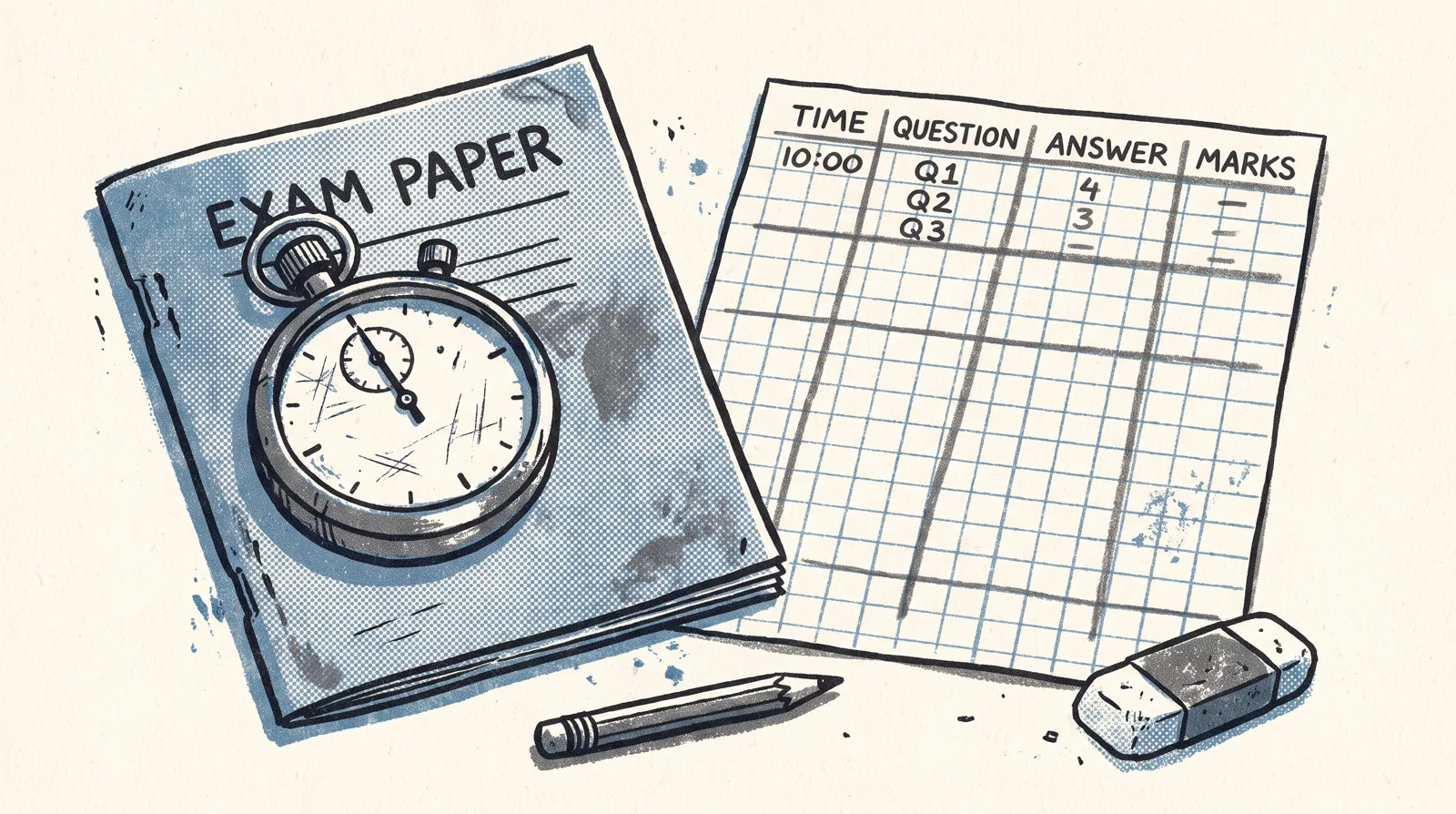
Beginner Binary, Hex and Data Units The topic that costs more marks than any other on the paper, taught by hand. Bits and bytes, binary and hex in all six directions, the 1000-versus-1024 trap, file sizes, transmission times, overflow, two's complement and character sets. Every module ends in a timed drill marked the way an examiner marks it.
Python From a White Sheet
Beginner Python From a White Sheet The exact sequence nine students have already walked, from a blank file to a program that asks questions, checks the answers and refuses bad input. No prior programming. No maths. You will break it repeatedly, on purpose.
IGCSE and GCSE Computer Science — Theory That Actually Gets Marked
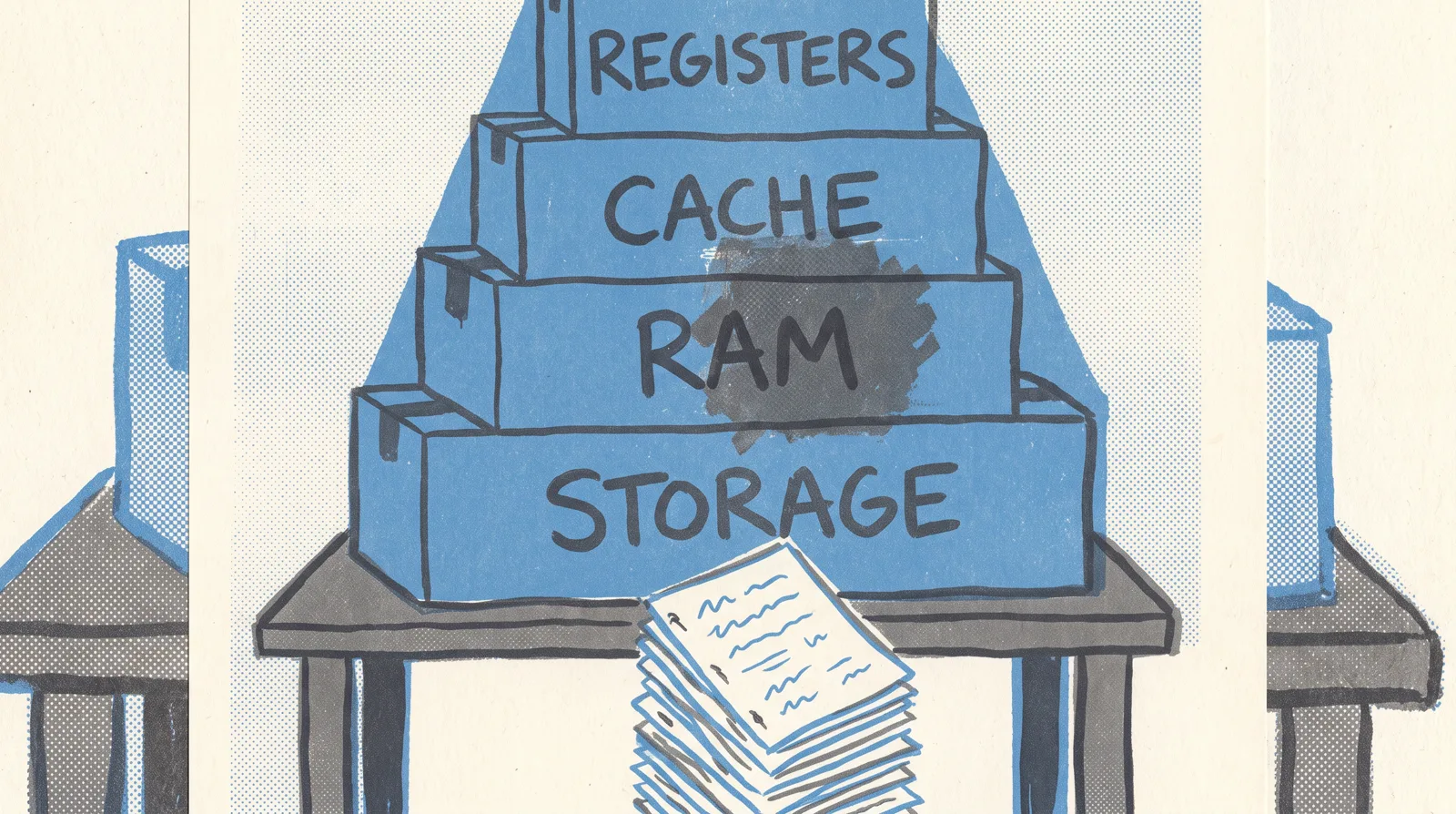
Intermediate IGCSE and GCSE Computer Science — Theory That Actually Gets Marked The theory half of the paper, taught so it survives the exam room. The memory hierarchy and what actually happens at boot. Compilers, interpreters and assemblers, including the answer that sounds right and scores nothing. Databases from a spreadsheet up to keys and normalisation. DNS and the full path between pressing Enter and seeing the page. Systems software, and the ethical and legal section that is the easiest ten marks on the paper.
Programming for the Exam — Python Answers That Score
Intermediate Programming for the Exam — Python Answers That Score The programming half of the paper, taught at exam pitch. Pseudocode translated both ways, because the mark scheme is written in a notation nobody practises. Trace tables done column by column, including the ones with a loop and a condition inside it. Linear and binary search, bubble and insertion sort, what each costs and the comparison questions boards love. Validation against verification, and the boundary test data everybody forgets. Procedures against functions, and a systematic method for finding your own error with four minutes left.