IGCSE and GCSE Computer Science — Theory That Actually Gets Marked
The theory half of the paper, taught so it survives the exam room. The memory hierarchy and what actually happens at boot. Compilers, interpreters and assemblers, including the answer that sounds right and scores nothing. Databases from a spreadsheet up to keys and normalisation. DNS and the full path between pressing Enter and seeing the page. Systems software, and the ethical and legal section that is the easiest ten marks on the paper.
- trending_upIntermediate
- schedule6h 7m
- menu_book12 节课程
- publicEnglish
- workspace_premiumBasic
课程概述
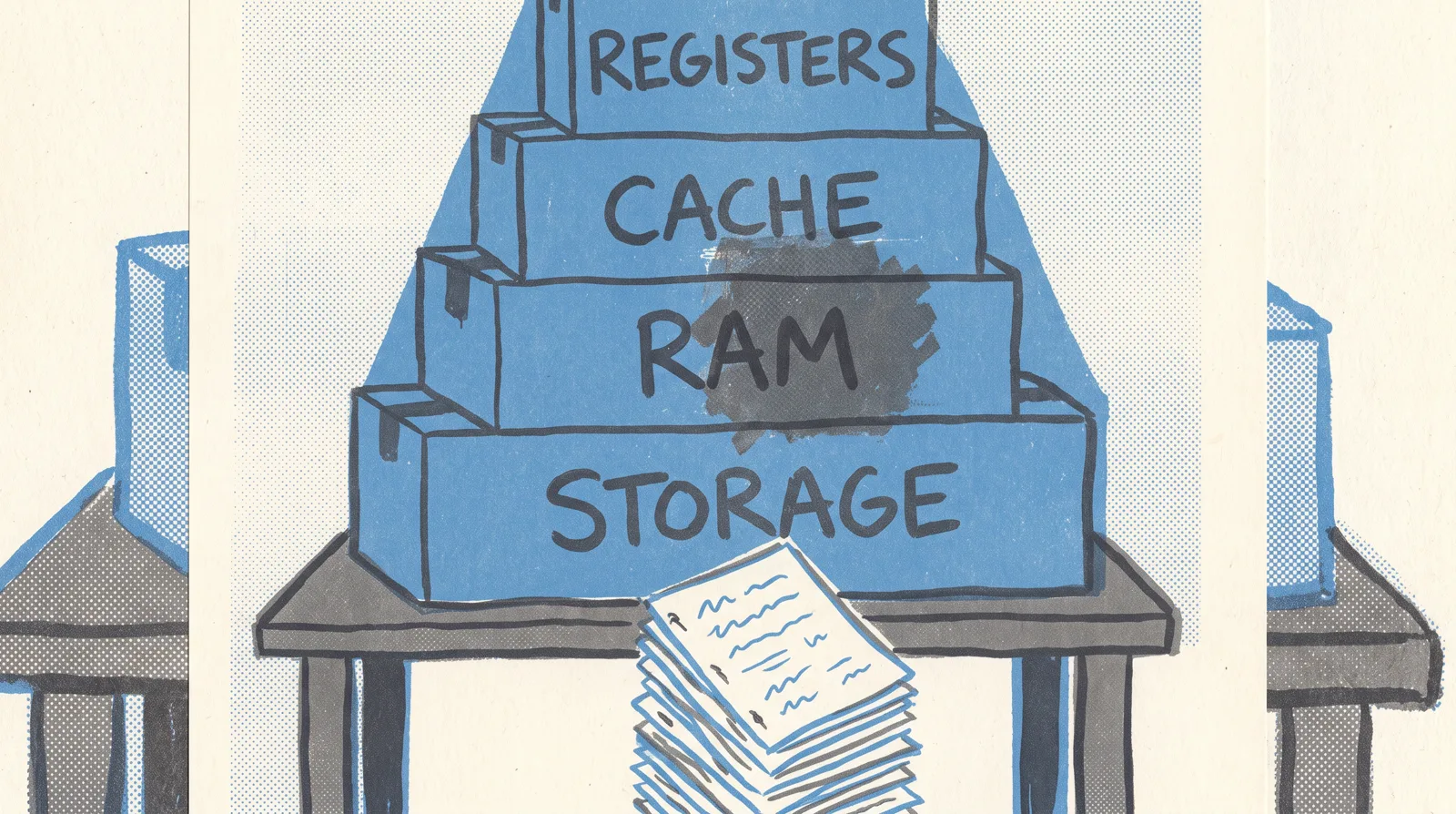
Every exam learner I have taught has been weak on the same three things, and one of them is not on this list because it has its own segment. The other two are compilers versus interpreters, and databases. One student named both himself before I had finished asking the question. What goes wrong is not difficulty. It is that this material is usually taught as vocabulary — a list of words with a list of definitions beside them — and the exam does not ask for vocabulary. It asks you to compare two things, or to put five steps in order, or to say what happens next. A candidate who has memorised "a compiler translates the whole program at once" writes exactly that sentence, and gets one mark out of four, and does not understand why. So this segment teaches the comparisons, not the words. You will learn the memory hierarchy as four things ranked by four properties, because that ranking is the question. You will learn what a computer does in the two seconds after you press the power button, in order, because that order is the question. You will split a spreadsheet into two proper tables by hand and be able to defend why. You will trace what happens between typing an address and the page arriving, and you will spend a whole lesson on DNS alone, because it comes up nearly every year and it is answered badly nearly every year. Every module ends with a timed drill marked the way an examiner marks it: what earns the mark, and the answer that looks right and earns nothing. Prerequisite: the segment Binary, Hex and Data Units. This one does not teach binary, hexadecimal or data units and will assume you can convert without being reminded how. Written against the published topic lists for CAIE IGCSE 0478 and the UK GCSE Computer Science specifications. The boards genuinely differ — on database depth, on whether SQL is examined at all, on how systems software is named — and where they differ this segment says so and tells you to check your own specification. Every question is original and modelled on the shape of exam questions; no past paper, mark scheme or specification text is reproduced, and Korra Academy is not affiliated with, or endorsed by, any exam board.
课程大纲 · 4 个模块
lock解锁权限内容- 01 Inside the Machine3 节课程·1h 27m
A student told me his weak topic was "the hardware theory". It was not. He could name every component in the box. What he could not do was rank them, and ranking them is the entire question. The…
- 02 Translators3 节课程·1h 29m
"A compiler translates the whole program at once." That sentence is true, it is what every textbook says, and on a four-mark comparison question it is worth one mark. It answers what the translator…
- 03 Databases, From a Spreadsheet Up3 节课程·1h 34m
Two separate learners have told me they knew "relational versus non-relational" as a pair of words with no picture behind them. That is the normal state of this topic and it is not their fault — a…
- 04 The Request, and the Rules3 节课程·1h 37m
A learner sent me a diagram question with one week to go. It started with a box labelled "the patient's computer" containing a web address, an arrow marked "URL typed in", and instructions to…
常见问题
- 我将在 IGCSE and GCSE Computer Science — Theory That Actually Gets Marked 中学到什么?
- The theory half of the paper, taught so it survives the exam room. The memory hierarchy and what actually happens at boot. Compilers, interpreters and assemblers, including the answer that sounds right and scores nothing. Databases from a spreadsheet up to keys and normalisation. DNS and the full pa
- 我需要有先前的经验吗?
- 建议在开始 IGCSE and GCSE Computer Science — Theory That Actually Gets Marked 前具有一定的先前知识。
- IGCSE and GCSE Computer Science — Theory That Actually Gets Marked 需要多长时间?
- IGCSE and GCSE Computer Science — Theory That Actually Gets Marked 包含 4 个模块和 12 节课程。您可以按自己的速度学习。
- 我如何获得访问权限?
- IGCSE and GCSE Computer Science — Theory That Actually Gets Marked 包含在任何付费订阅中。