code programming

Debugging: Finding It Yourself

The half of programming nobody teaches. You take one working program, break it nine ways, and find every fault by elimination rather than by staring at it. Ends with the kind of bug that raises no error at all.

  • trending_upBeginner
  • schedule5h 21m
  • menu_book9 leçons
  • publicEnglish
  • workspace_premiumBasic
Debugging: Finding It Yourself

Briefing

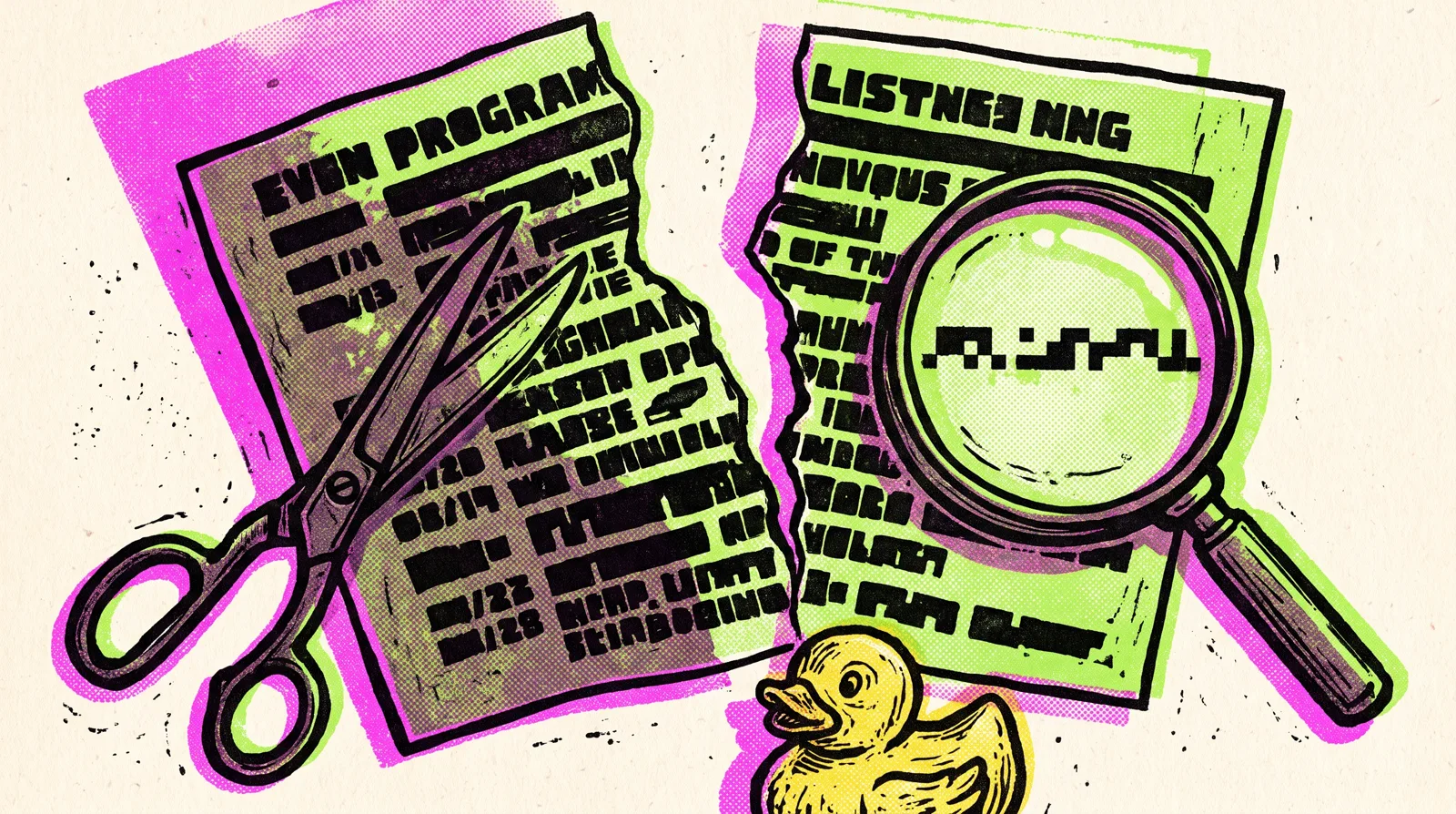
Every beginner course stops at "and now it works". Then the learner goes home, changes one line, and has no method for what happens next. This segment is the method. One small program — a bill splitter, about twenty lines — gets broken repeatedly and you get it back. You will read a traceback properly instead of scrolling past it. You will cut a file in half with `exit()` and cut it in half again until two lines are left. You will comment out everything except one function and drive it directly. You will print a value raw, then stripped, then lowered, so you can see the transformation instead of reasoning about it. Then the gauntlet: missing colon, wrong quote characters, stray whitespace, indentation, `=` where you wanted `==`, a result you never stored, two functions with the same name, an input asked for twice, a `TypeError` on text that was never converted, and text glued together where you meant to add numbers. Six of those tell you something is wrong. The rest do not say a word, and those are the ones that reach other people.

Plan du cours · 3 modules

lockSe déverrouille avec l'accès
  1. 01 Reading What It Already Told You
    3 leçons·1h 9m

    A traceback is read from the bottom. The last line is a sentence. The line number above it is where Python gave up, which is not always where you went wrong. Read it, then act. Guessing before…

  2. 02 Elimination, Not Inspiration
    3 leçons·1h 37m

    Real troubleshooting is elimination. You do not find the fault by thinking harder about the whole file; you find it by making the file smaller until there is nowhere left for it to hide.

  3. 03 The Gauntlet
    3 leçons·2h 35m

    One fix, one run. A file with four changes in it and a fresh error tells you nothing about which change caused what.

Questions fréquentes

Qu'apprendrai-je dans Debugging: Finding It Yourself ?
The half of programming nobody teaches. You take one working program, break it nine ways, and find every fault by elimination rather than by staring at it. Ends with the kind of bug that raises no error at all.
Ai-je besoin d'une expérience préalable ?
Non — Debugging: Finding It Yourself part des fondamentaux et convient aux débutants.
Combien de temps dure Debugging: Finding It Yourself ?
Debugging: Finding It Yourself comprend 3 modules et 9 leçons. Vous apprenez à votre propre rythme.
Comment obtenir l'accès ?
Debugging: Finding It Yourself est inclus dans tout abonnement payant.

Plus dans Programmation
Binary, Hex and Data Units
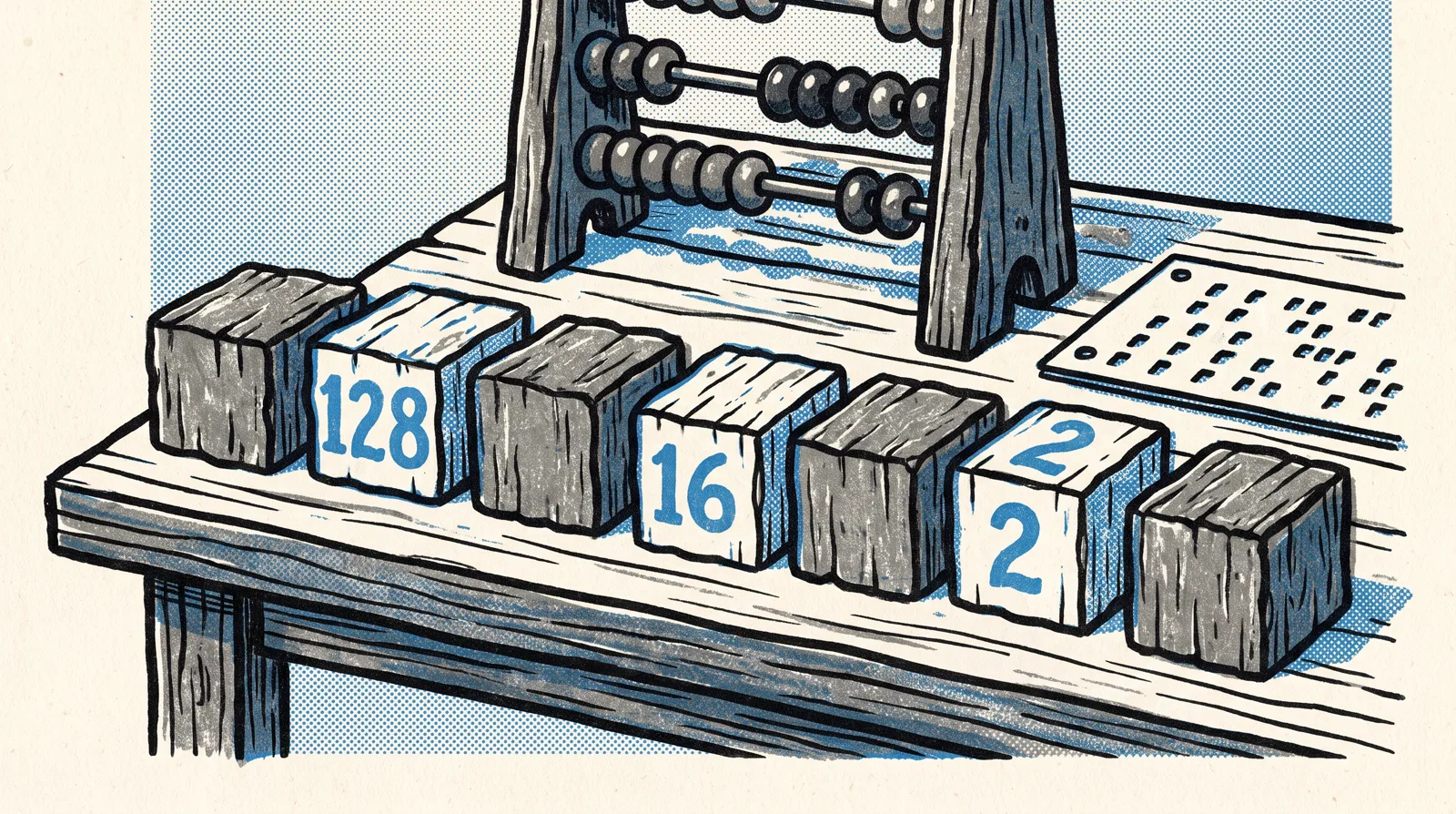
Beginner Binary, Hex and Data Units The topic that costs more marks than any other on the paper, taught by hand. Bits and bytes, binary and hex in all six directions, the 1000-versus-1024 trap, file sizes, transmission times, overflow, two's complement and character sets. Every module ends in a timed drill marked the way an examiner marks it.
First Program — Scratch for ages 5–9
Beginner First Program — Scratch for ages 5–9 Nine Scratch blocks, three sessions of about twenty-five minutes, and one small program a child of five to nine builds themselves. Written for the parent sitting beside them: what to click, what they will get stuck on, what to say when it goes wrong, and when to keep your hands off the mouse.
L'IA sans le battage
Beginner L'IA sans le battage Ce que le modèle fait réellement quand il te répond, pourquoi ça produit quelque chose qui ressemble à de la réflexion, pourquoi il invente des citations, et le mécanisme de coût que presque personne n'explique : un chat renvoie la conversation entière à chaque tour. Tu feras l'arithmétique toi-même.
Python à partir d'une feuille blanche
Beginner Python à partir d'une feuille blanche La séquence exacte que neuf étudiants ont déjà parcourue, d'un fichier vide à un programme qui pose des questions, vérifie les réponses et refuse les mauvaises entrées. Aucune connaissance en programmation. Aucune mathématique. Vous le casserez à répétition, intentionnellement.
IGCSE et GCSE Informatique — Théorie qui se note vraiment à l'examen
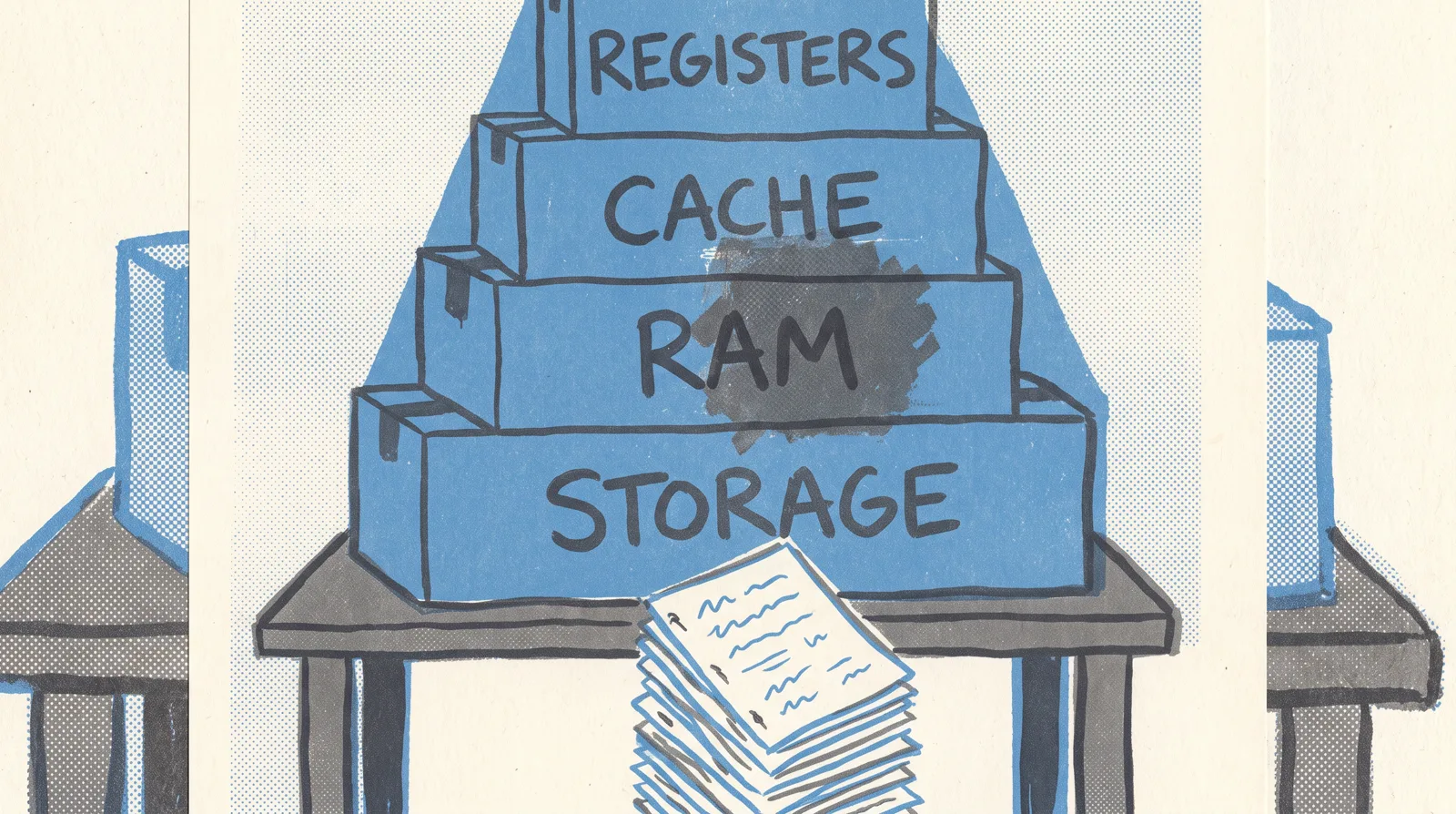
Intermediate IGCSE et GCSE Informatique — Théorie qui se note vraiment à l'examen La partie théorie de l'épreuve, enseignée pour qu'elle survive dans la salle d'examen. La hiérarchie mémoire et ce qui se passe réellement au démarrage. Compilateurs, interpréteurs et assembleurs, y compris la réponse qui semble juste et ne rapporte rien. Les bases de données du tableur jusqu'aux clés et la normalisation. DNS et le chemin complet entre appuyer sur Entrée et voir la page s'afficher. Les logiciels système, et la section éthique et légale qui est les dix points les plus faciles de l'épreuve.
Programming for the Exam — Python Answers That Score
Intermediate Programming for the Exam — Python Answers That Score The programming half of the paper, taught at exam pitch. Pseudocode translated both ways, because the mark scheme is written in a notation nobody practises. Trace tables done column by column, including the ones with a loop and a condition inside it. Linear and binary search, bubble and insertion sort, what each costs and the comparison questions boards love. Validation against verification, and the boundary test data everybody forgets. Procedures against functions, and a systematic method for finding your own error with four minutes left.